Male Breast Reduction in Abu Dhabi: A Patient's Guide
Medically reviewed by Dr. Paulo Michels — 29 August 2026· Updated 23 October 2026
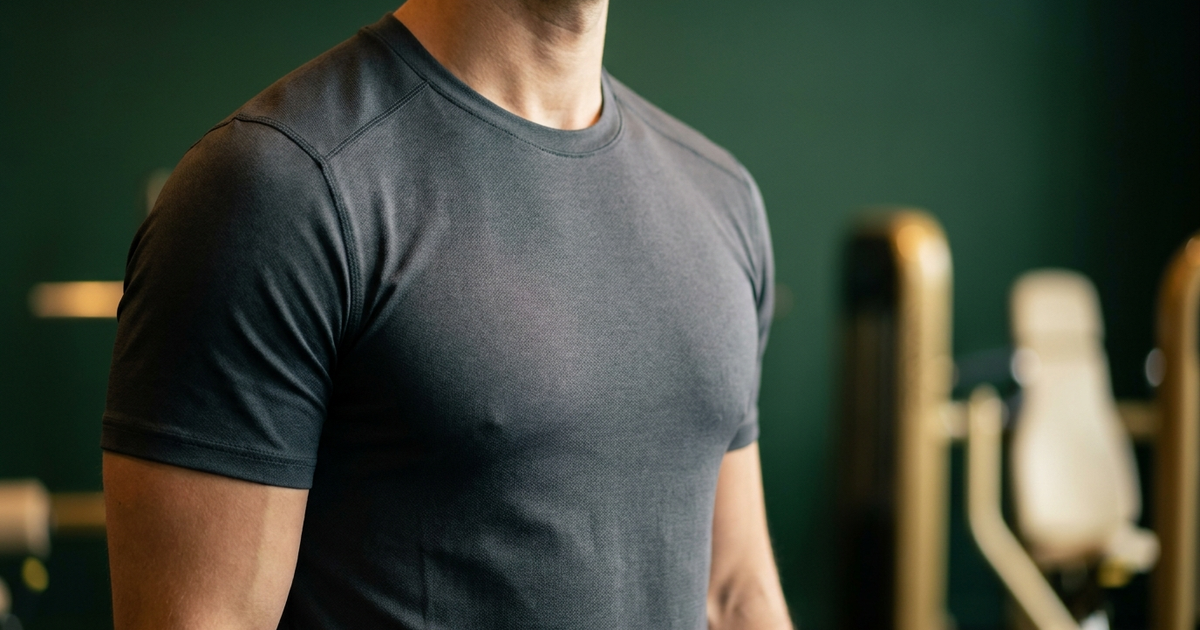
If you have been searching for “male breast reduction”, the medical condition behind the term is gynecomastia, and whether your chest is fat, gland or both decides the operation. Dr. Paulo Michels, a Brazilian board-certified plastic surgeon who received the ISAPS Gold Medal for Best Body Contouring at the World Plastic Surgery Olympiads 2025, welcomes patients from Dubai and across the UAE for this procedure.
What exactly is being reduced — fat, gland, or both?
This is the single most important question, because it determines the entire surgical plan. Men often misdiagnose themselves from quick online searches, but the anatomy falls into two distinct categories:
- Pseudogynecomastia (fat) — a strict accumulation of subcutaneous fat in the chest due to genetics or weight fluctuations, with no glandular growth. It feels soft and diffuse.
- True gynecomastia (gland) — triggered by hormonal shifts, this is the growth of the fibromuscular stroma and mammary ducts. It presents as a firm, rubbery, sometimes sensitive disc directly behind the areola.
The distinction matters enormously. Diet and exercise can reduce chest fat — but the dense glandular tissue of true gynecomastia is completely immune to caloric deficits and weightlifting. No number of push-ups will shrink it. Direct surgical removal is the only anatomical cure. During your consultation, Dr. Michels diagnoses the exact composition of your chest using a physical exam and imaging if necessary, so the correct approach is chosen from the start. The full clinical picture is explained on the gynecomastia surgery page.
It is also worth noting that male breast reduction is a fundamentally different operation from breast reduction in women — the goals, incisions and techniques are designed specifically for the masculine chest.
What causes gynecomastia in the first place?
Gynecomastia is far more than an aesthetic concern. Many men hunch their shoulders, wear multiple layers even during the scorching UAE summer, and avoid any environment that requires a bare torso; some also experience physical pain, tenderness or tightness in the chest. Although it often appears in boys during puberty due to hormonal fluctuations, it can also affect adult men. Common root causes include:
- Hormonal imbalance — a disruption in the ratio between oestrogen and testosterone
- Fat accumulation and obesity — excess weight can increase oestrogen levels, compounding the issue
- Medications and anabolic steroids — certain prescription drugs and performance-enhancing steroids directly impact hormone production
- Genetics and health conditions — underlying factors that alter the endocrine system
Surgery is generally delayed until breast development has fully stabilised — typically around age 18. For adult men with sudden-onset gynecomastia, surgery can be performed at any age once underlying medical conditions have been ruled out.
How is gynecomastia graded — and how does the grade change the surgery?
To provide a customised surgical plan, gynecomastia is categorised into four clinical stages:
| Clinical grade | Physical characteristics | Recommended surgical approach |
|---|---|---|
| Grade 1 (mild) | Minor puffiness limited to the areola (“puffy nipples”); no excess skin | Direct glandular excision via an invisible incision, minimal liposuction |
| Grade 2 (moderate) | Glandular growth spreading beyond the areola; 2A (no skin laxity) or 2B (moderate skin laxity) | VASER liposuction combined with gland excision; skin retraction technologies are vital for 2B |
| Grade 3 (severe) | Massive expansion mimicking the female breast; severe skin redundancy and drooping | Advanced excision, often with periareolar skin resection |
| Grade 4 (massive) | Extreme chest volume with profound skin folds reaching the armpits | Radical excision, often with an inverted-T incision and free nipple grafting |
When is liposuction enough — and when must the gland be excised?
The surgical menu follows directly from the diagnosis:
- Chest liposuction only — reserved exclusively for pure pseudogynecomastia in patients with good skin elasticity. A thin cannula removes the excess fat and seamlessly contours the area.
- Glandular tissue excision only — for isolated fibrous discs, common in athletes. A small incision removes the gland, providing a flat contour and long-lasting results.
- Combination approach (gland removal plus chest liposuction) — the gold standard for most cases, combining advanced liposuction and surgical excision for optimal chest definition.
Where liposuction is used, Dr. Michels works with VASER — gentle ultrasound wave energy that precisely melts chest fat before removal while preserving surrounding blood vessels, nerves and connective tissue. Compared with traditional aggressive liposuction, this means smoother contouring, less bruising and significantly better skin retraction across the pectoral muscles. For patients with moderate skin laxity, advanced internal energy devices shrink and tighten the skin from the inside out, avoiding large scars. And for men who want an athletic, highly defined result, UGRAFT technology can purify the removed fat and strategically inject it into the pectoralis major muscle to enhance natural chest definition.
What about bodybuilders and steroid-induced gynecomastia?
In the UAE’s thriving fitness culture, many men with advanced muscle hypertrophy suffer from isolated puffy nipples caused by anabolic androgenic steroids: high levels of exogenous testosterone can convert into oestrogen, triggering a hard, sometimes painful glandular disc directly behind the nipple. Because these athletes have almost zero subcutaneous fat, liposuction is ineffective — the answer is direct cold-excision of the fibrotic tissue through a meticulously placed, practically invisible incision at the border of the areola. Dr. Michels performs these specialised excisions routinely, restoring a flat chest without compromising muscle definition. One caveat is permanent: the excised gland cannot grow back, but continuing unprescribed anabolic steroids could potentially trigger remaining microscopic cells.
What are the scars, anaesthesia and surgery time like?
For most patients — Grades 1 and 2 — the gland is removed through a tiny, crescent-shaped incision hidden exactly on the border of the areola; once healed, the scar is practically invisible. Large chest incisions are reserved for massive Grade 4 cases requiring significant skin removal.
The procedure is performed under highly secure local anaesthesia with deep sedation or general anaesthesia, and ultrasound-guided nerve blocks numb the specific nerves of the chest so most men wake up comfortable and the first days need little more than oral medication. An isolated gland removal takes approximately 1 hour; a comprehensive chest sculpting procedure with VASER liposuction, complete gland excision and skin retraction typically takes 2 to 3 hours.
Technique also guards against the crater deformity, where the nipple collapses after too much tissue is removed. Dr. Michels preserves a standardised flap of healthy tissue directly beneath the areola to support a natural nipple projection, and he performs revision surgery for men who have had this or other problems after surgery elsewhere.
How fast is the recovery — and when can I get back to the gym?
Recovery is usually quick when post-operative instructions are followed:
- Days 1–2 — same-day discharge from Elyzee Hospital; you wear a compression garment and experience manageable swelling
- Days 5–7 — sharp decrease in inflammation; most patients return to desk jobs and light walking
- Weeks 2–3 — bruising resolves; light lower-body workouts such as walking or stationary cycling can begin (the chest remains isolated)
- Weeks 4–6 — full clearance: heavy chest training, push-ups, swimming and intense impact exercises
The 4-to-6-week wait for chest training is not negotiable: it gives the chest time to heal and the skin time to retract over the new contour. A specialised medical compression vest is worn under clothing for 3 to 4 weeks; it minimises swelling, prevents fluid build-up and helps the skin adhere to the newly sculpted chest. Because minimally traumatic techniques are used, surgical drains are rarely necessary for Grade 1 and 2 cases and are generally reserved for severe Grade 4 cases.
In Dr. Paulo Michels’ practice
Dr. Paulo Michels starts by establishing what the chest is made of. At the consultation he examines the chest, uses imaging if necessary, and classifies the grade, because the grade decides the operation:
- Grade 1 — the gland is excised directly through a small crescent incision on the border of the areola, with minimal liposuction. Liposuction alone would leave the firm disc behind the nipple.
- Grade 2 — VASER liposuction combined with gland excision. In Grade 2B, where the skin is moderately loose, internal energy devices tighten it from the inside to avoid large scars.
- Grades 3 and 4 — the excess skin is too great for retraction alone, so skin is removed: around the areola in Grade 3, and often with an inverted-T incision and free nipple grafting in Grade 4.
He reserves liposuction alone for pure pseudogynecomastia with good skin elasticity, and does not offer it for a firm glandular disc. For bodybuilders with almost no fat, he removes the gland directly rather than using liposuction. In every grade he leaves a standardised flap of tissue beneath the areola to support the nipple. He advises men who use unprescribed anabolic steroids that continuing them could stimulate remaining microscopic cells.
Questions men commonly bring to him are whether diet and training could fix it, whether the scar will show, and when they can train their chest again. The reasoning behind each grade is explained in more depth in gynecomastia grades and surgical technique.
When should I contact your surgeon during recovery?
Contact the surgical team promptly if you notice any of the following observable signs: bleeding from an incision, redness or warmth that is spreading across the chest rather than fading, a wound that opens or begins to discharge, swelling that is clearly increasing on one side compared with the other, or bruising that keeps expanding after the first days. Routine reviews are scheduled in advance — but if something on your chest looks like it is getting worse instead of better, the team wants to see it early.
How does the consultation work, and what about cost?
Your consultation at Elyzee Hospital in Abu Dhabi is a comprehensive, private and judgement-free medical evaluation: a review of your medical history, a physical examination to classify the grade of your gynecomastia, and a discussion of your aesthetic goals — after which you leave with a clear, personalised surgical plan. Patients travelling from Dubai are seen routinely, and because the surgery usually allows same-day discharge, most need very few journeys: where possible the consultation, pre-operative tests and surgical date are scheduled together, and follow-up reviews are grouped in the same way.
As for cost, the investment depends entirely on the clinical grade of the condition — whether the surgery requires isolated gland excision, the integration of VASER liposuction, or advanced skin retraction technologies. A fully transparent, customised surgical plan is provided at the consultation. Note that health insurance providers do not cover aesthetic surgeries, and gynecomastia correction is classified as an aesthetic procedure. If your chest has been dictating what you wear and where you go, the first step is a single, confidential consultation to find out which grade you have and what it needs.
Related procedureRead the full procedure page →
For patients in DubaiPlastic surgeon in Dubai — how visits work →