Why Swelling After Liposuction Lasts Months — and What Helps
Medically reviewed by Dr. Paulo Michels — 23 July 2026· Updated 23 July 2026
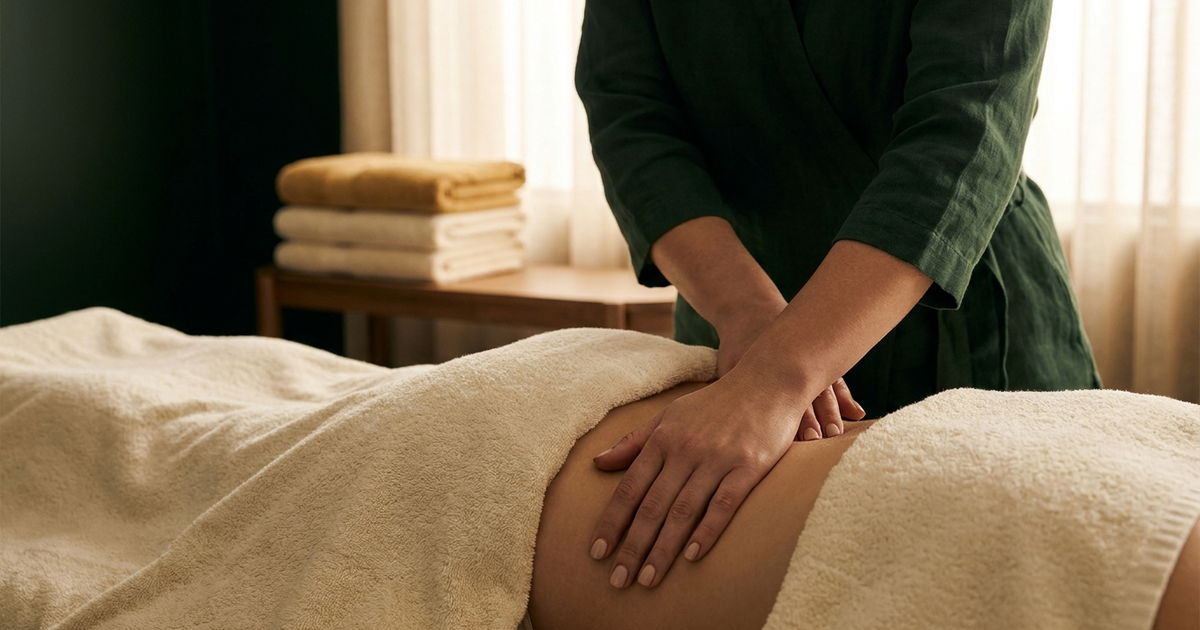
Swelling after liposuction is not a complication — it is the expected, months-long final act of the surgery itself. Most patients see the bulk of visible swelling subside over the first weeks, but the deep tissue swelling that stands between you and your final contour takes three to six months to fully resolve. This guide explains why that timeline is built into the biology of the procedure, what genuinely helps it along, and how Dr. Paulo Michels manages this phase after liposuction at Elyzee Hospital in Abu Dhabi — for patients from Abu Dhabi & Dubai alike.
Why does liposuction cause so much swelling in the first place?
Three things happen during liposuction that the body then spends months undoing.
First, the treated areas are infused with tumescent fluid — a medicated saline solution that swells the fat for safer, gentler removal and constricts blood vessels to minimise bruising. Some of that fluid drains in the first days; the rest is gradually absorbed.
Second, removing fat creates a network of tiny tunnels between the skin and the muscle. The body responds to any surgical work the same way it responds to any injury: with inflammation. Fluid moves into the healing tissue as part of the repair process itself — inflammation is not the enemy of healing, it is healing.
Third, and most importantly for the timeline: the fine lymphatic channels that normally carry fluid out of the area are temporarily disrupted. Until they re-establish themselves, fluid leaves the treated zones more slowly than it arrives. That plumbing takes weeks to months to fully restore — which is precisely why swelling outlasts bruising, soreness and every other early symptom.
Technique changes how much of this you experience. Dr. Michels performs VASER high-definition liposuction with real-time ultrasound guidance: the ultrasound energy liquefies fat selectively while leaving blood vessels, nerves and connective tissue intact, which means less trauma and less swelling than traditional mechanical techniques. But no technique eliminates the biology — even the gentlest liposuction is followed by months of quiet fluid resolution.
What does a normal swelling timeline look like?
Every body heals on its own schedule, but the shape of the curve is remarkably consistent:
- Days 1–3. Swelling builds rather than fades. Some leftover tumescent fluid may drain from the tiny incisions — this looks dramatic and is completely normal.
- Week 1. Swelling and bruising peak. You may briefly weigh more than before surgery — that is fluid, not fat, and it is temporary.
- Weeks 2–4. The most noticeable improvement phase. Bruising resolves, the sharp early swelling subsides, and the new contour starts to show — softened, as if seen through frosted glass.
- Months 2–3. A plateau that tests patience. The remaining swelling is deep, firm and slow-moving. Many patients also notice temporary firmness or lumpiness under the skin as tissues knit — expected at this stage, and one of the things compression and massage are there to smooth out.
- Months 3–6. The final refinement. Deep swelling completes its exit, the skin finishes retracting and tightening, and the true result emerges. This matches what patients are told before surgery: the final, refined result of liposuction takes three to six months.
Two reassurances worth pinning to the mirror. Swelling on both sides of the body, mild to moderate, fluctuating a little from day to day — often worse in the evening or after time on your feet — is normal recovery, not a warning sign. And a “swollen” week three says nothing about your final result; the contour created on the operating table is still there, waiting under the fluid.
Why do some areas stay swollen longer than others?
Gravity and anatomy. Fluid follows gravity downward, so after abdominal or flank liposuction it is common for the lower abdomen and pubic area to swell even if they were not treated — the fluid has simply migrated south on its way out. Areas with naturally slower lymphatic drainage, such as the inner thighs, calves and ankles, also tend to hold swelling longer than the abdomen or arms. When liposuction is combined with subdermal skin tightening — Dr. Michels uses Renuvion plasma energy beneath the skin to contract and tighten the treated areas — the tissues have an additional healing process underway, and your team will set expectations for your specific plan.
What actually helps reduce swelling?
Four things carry almost all the weight — and none of them is exotic.
The compression garment. Worn essentially around the clock in the early weeks and for six to eight weeks in total, as your team directs. It does three jobs at once: limits how much fluid can accumulate, presses the healing skin smoothly back onto the muscle, and helps prevent fibrosis — the firm, lumpy scar tissue that can form under the skin when swelling lingers unmanaged. In the UAE this comes with one practical rule: live in air conditioning. Sweating under a garment worn day and night irritates the skin and works against healing, so time outdoor errands for early morning or evening in the hotter months.
Manual lymphatic drainage (MLD). These specialised, gentle massage sessions stimulate the lymphatic system and usually begin in the first week. Started early, MLD helps the body clear inflammatory fluid faster, reduces swelling sooner and helps prevent fibrotic buildup under the skin. It is the single most underestimated part of liposuction aftercare.
Walking. Light walking is required from day one — not for fitness, but because muscle movement is the pump that drives the lymphatic system. Short, frequent walks move fluid; lying still lets it pool. Structured exercise then returns in stages: light cardio typically from weeks two to four, with heavy lifting and aggressive core training waiting four to six weeks so the deeper tissues can heal.
Time. The least satisfying item on the list and the only non-negotiable one. Lymphatic channels regrow on their own schedule. Everything above helps the process along; nothing replaces it.
Alongside these, ordinary good sense applies: stay well hydrated, eat normally rather than restrictively, and avoid very salty meals in the early weeks, which encourage the body to hold fluid.
Is it swelling, fluid buildup or fibrosis?
Three different things patients often lump together:
- Swelling is diffuse, soft-to-firm, symmetrical and slowly improving. It is managed with the garment, MLD and time.
- A seroma is a discrete pocket of fluid that can collect under the skin — it may feel like a soft, sloshing bulge in one spot. It is treatable, but it needs your surgical team to assess it; this is a reason to send a message and be seen, not to wait.
- Fibrosis is firm, uneven, scar-like tissue that can develop where swelling has sat too long. Prevention is the strategy: gentle VASER technique, faithful garment use and early MLD exist largely to stop it forming.
If you cannot tell which of the three you are feeling, do not diagnose yourself from a blog — including this one. Describe it to your team, ideally with a photo. That is what follow-up is for.
When should you contact your surgeon?
Normal swelling is bilateral, gradual and slowly improving. Contact the clinic promptly if you notice any of the following:
- Swelling that increases suddenly, or is clearly greater on one side
- A distinct, growing bulge in one spot under the skin
- Redness that is spreading outward from an incision
- Discharge from an incision beyond the expected fluid of the first days
- Bleeding that soaks through a dressing
- One leg becoming visibly more swollen than the other
- Feeling increasingly unwell rather than gradually better
None of these automatically means something is wrong — but each deserves a same-day conversation with your team rather than a wait-and-see approach.
How do you stay sane during the waiting months?
A few habits that help patients through the plateau:
- Photograph monthly, not daily. Day-to-day changes are invisible and demoralising; month-to-month changes are unmistakable.
- Judge by clothes, not the mirror. Waistbands register progress earlier and more honestly than close-up inspection.
- Expect the evening swell. Being more swollen at night than in the morning is fluid physics, not regression.
- Keep follow-up appointments even when everything feels fine — the plateau months are exactly when small course corrections matter.
It is also worth remembering what swelling is hiding rather than threatening: the fat cells removed during liposuction are gone permanently. If your skin quality was the limiting factor, your surgeon will have discussed that honestly before surgery — in some cases a tummy tuck is the right operation instead of, or alongside, liposuction precisely because loose skin does not shrink to fit a slimmer contour.
The result is already there
Swelling after liposuction lasts months because the body needs months to rebuild the drainage system the surgery necessarily disturbs. The garment, the massage sessions, the daily walks and the air-conditioned patience are how you help it along — and the contour sculpted in the operating room is underneath it all, emerging a little more each month. In consultation at Elyzee Hospital in Abu Dhabi, Dr. Paulo Michels maps this timeline onto your specific surgical plan, so that when the slow months arrive, you know they were part of the plan all along.
Related procedureRead the full procedure page →
For patients in DubaiLiposuction in Dubai →