Breast Implant Revision and Replacement in the UAE: When and Why
Medically reviewed by Dr. Paulo Michels, Board-Certified Plastic Surgeon· Updated 8 September 2026
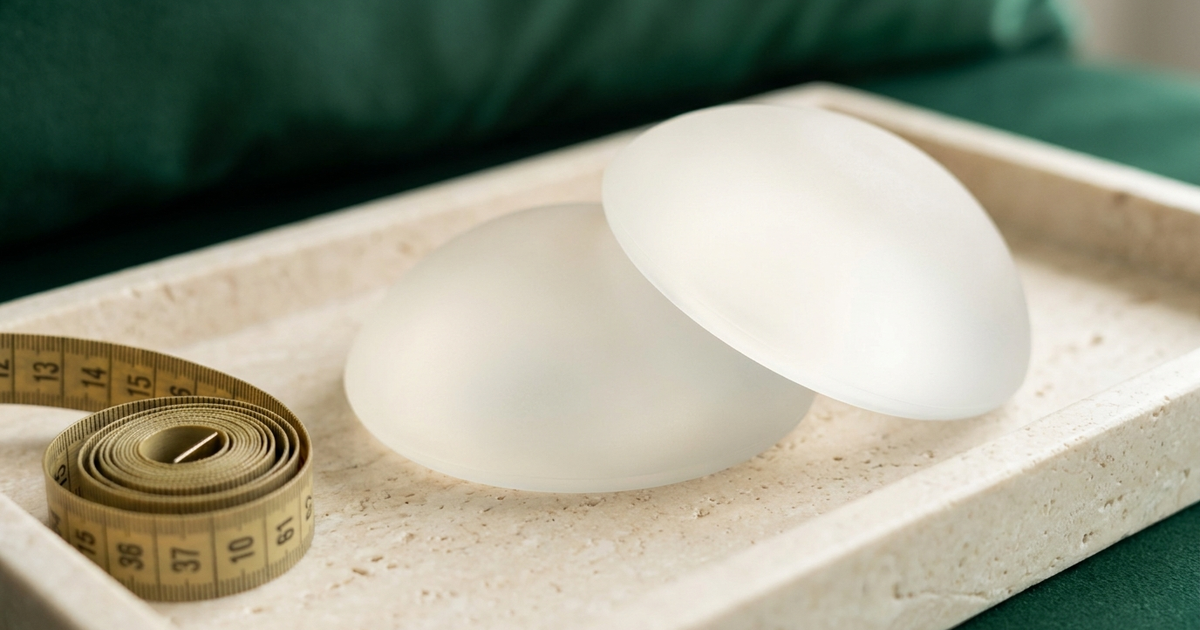
Breast implants are replaced or removed when there is a clinical or personal reason — a rupture, a capsular contracture, an implant that has shifted or bottomed out, or simply a change in what you want your breasts to look like a decade later. They are not replaced because ten years have passed. Dr. Paulo Michels, a Brazilian board-certified plastic surgeon, performs breast implant revision and explantation at Elyzee Hospital in Abu Dhabi, seeing patients from Dubai and across the UAE, and this guide explains how the second operation differs from the first.
Do implants really have a ten-year shelf life?
This is the single most persistent myth in breast surgery. Modern cohesive silicone implants are very durable and do not carry a strict ten-year expiration date. The ten-year figure came from older device generations and from manufacturer warranty periods, and it has been repeated so often that patients arrive at consultation apologetic about being “overdue”.
You do not need surgery you have no reason for. What you do need is long-term follow-up: a surgeon who sees you periodically, examines the breasts, and arranges imaging when something warrants it. Implants are replaced when a complication occurs — rupture or severe capsular contracture — or when your aesthetic goals have genuinely changed. That is the whole list.
The other half of the picture is that breasts continue to age around the implant. Pregnancy, weight change, breastfeeding and time all alter the natural tissue. An implant that looked right at 30 may sit inside a very different breast at 45, and that is often what actually brings patients back — not a device failure.
What are the signs an implant needs attention?
Some are obvious, some are quiet. The ones worth acting on:
- The breast has become firm, round or high. Progressive hardening, an implant riding upward, or a breast that has lost its natural teardrop slope points to capsular contracture. It usually develops gradually and is often one-sided.
- The shape has changed. Rippling that was not there before, a visible edge, an implant sitting too low beneath the crease (bottoming out), or two breasts that have drifted out of symmetry.
- A sudden deflation. If a saline implant ruptures, the sterile saltwater is harmlessly absorbed and the breast visibly deflates over hours or days. The shell must then be removed and replaced.
- Nothing at all. A rupture in a modern cohesive silicone implant is typically a silent rupture — the thick gel stays contained within the scar-tissue capsule and you notice no change. It is not an emergency, but once detected on MRI or ultrasound the implant should be surgically replaced.
- Persistent pain or a new discomfort in one breast that does not settle.
None of these are self-diagnosable from a mirror. They are reasons to book an examination, not reasons to panic.
Why is capsular contracture the most common reason for revision?
Every implant is enclosed by a capsule of scar tissue — that is normal biology, not a complication. Contracture is what happens when that capsule tightens and contracts around the implant, squeezing it into a rounder shape, lifting it on the chest and making the breast feel hard. In its more advanced grades it becomes visibly distorting and uncomfortable.
Treatment is surgical. Massage, supplements and medication do not reverse an established contracture. The operation involves removing or releasing the capsule, exchanging the implant, and — critically — changing the conditions that allowed it to form. That often means moving the implant to a Dual Plane position if it was previously subglandular, switching from a textured to a smooth or nano-textured device, and using a no-touch sterile funnel insertion technique.
This is why prevention matters at the primary operation. Dual Plane placement, no-touch insertion and premium smooth or nano-textured implants are the measures that lower the risk in the first place — the same principles then guide the revision.
What is the difference between exchange, revision and explantation?
The words get used loosely, so it helps to separate them.
Implant exchange is the simplest version: the old implant comes out, a new one goes in through the same incision, and the pocket is largely unchanged. This suits patients whose only issue is a rupture in an otherwise well-positioned, well-shaped breast, or who simply want a different size or profile.
Revision implies reconstruction of the pocket itself. Capsule removal, pocket adjustment to correct malposition, reinforcement of the inframammary fold with the Internal Bra technique, and sometimes fat transfer to soften a visible edge. This is the more common scenario and the more demanding one.
Explantation means the implants come out and do not go back. Some patients want this because their goals have changed, some because of concerns about symptoms they attribute to their implants — what is informally called Breast Implant Illness. It is not currently a recognised medical diagnosis, but the reports are taken seriously, and removal often resolves symptoms for those patients. Explantation is frequently combined with a breast lift so that the remaining tissue is reshaped rather than left to settle unsupported.
Why is revision planned differently from a first augmentation?
Because the surgeon is not working with an untouched breast. In a primary augmentation the anatomy is predictable: measured chest base width, intact tissue planes, a pocket created from scratch. In a revision there is an existing capsule, tissue that has been stretched by years of implant weight, scar from the previous incision, and sometimes a technical decision made a decade ago that now needs undoing.
Three practical consequences:
- The assessment is longer. Imaging is often needed before any plan is made. Skin quality, tissue thickness over the upper pole and the position of the nipple relative to the crease all determine whether an implant alone can restore the shape or whether a lift must be added.
- The operation usually takes longer than a straightforward augmentation, particularly where capsule work or a simultaneous lift is involved.
- Support becomes central. Tissue that has already carried an implant for years is less resilient. The Internal Bra — a suturing technique that reinforces the inframammary fold and acts as a permanent internal hammock — is often the difference between a result that holds and one that gradually descends again.
Sizing is also a different conversation. Many revision patients choose to go smaller, not larger, because the tissue envelope has been stretched and a slightly reduced volume sits better and ages more gracefully. Some opt for a hybrid approach, pairing a smaller implant with fat transfer to soften the edges. If you are still working through this decision, our guide on choosing breast implant size covers the anatomical logic behind it.
What does recovery after revision surgery feel like?
Broadly similar to a primary augmentation, sometimes a little slower where extensive capsule work was needed. Most patients go home the same day. Expect chest tightness and deep soreness rather than sharp pain for the first three to five days, managed with prescribed oral medication.
A realistic outline:
- Days 1–5: rest with light walking from the outset; a medical compression bra worn continuously.
- Days 3–5: desk work is usually manageable.
- Weeks 4–6: no running, high-impact cardio or upper-body weight training; sleep on your back with the upper body elevated.
- Week 6: typically cleared for normal bras, swimwear and full training.
If you are travelling, plan to wait at least seven to ten days before flying. Patients who want the fuller week-by-week picture can read our breast augmentation recovery guide, which maps the same phases in more detail.
When should I contact the surgeon after revision surgery?
Contact the surgical team promptly if one breast becomes markedly more swollen, tense or painful than the other, if redness spreads across the skin, if an incision opens or begins to discharge, if you develop fever, or if the shape changes abruptly. Sudden shortness of breath or chest pain warrants emergency care rather than a phone call. Scheduled reviews are arranged in advance and are part of the plan, not an optional extra.
Longer term, keep two habits: attend your follow-up appointments even when everything feels fine, and continue routine mammogram screening, informing the technician that you have implants so that Eklund displacement views can be used.
How are revision consultations arranged in Abu Dhabi?
Consultations and surgery take place at Elyzee Hospital in Abu Dhabi. Dr. Paulo Michels — board certified by the Brazilian Society of Plastic Surgery, member of ISAPS, ASPS and EPSS, and Gold Medal winner for Best Body Contouring at the ISAPS World Plastic Surgery Olympiads 2025 — examines the breasts, reviews any previous operative records you can bring, arranges imaging where needed, and explains plainly which of the three routes — exchange, revision or explantation — fits your anatomy and your goals.
Bring what you have: implant cards, old operative notes, the name of the device if you know it. It genuinely changes the planning. Patients travelling from Dubai and across the UAE are seen routinely, with appointments grouped where possible, and the first days after surgery are spent in Abu Dhabi under clinical monitoring. Consultations are unhurried and private, in English, Portuguese or Spanish.
Related procedureRead the full procedure page →
For patients in DubaiBreast augmentation in Dubai →