How Painful Is Liposuction Recovery?
Medically reviewed by Dr. Paulo Michels — 23 July 2026· Updated 23 October 2026
The honest answer: liposuction recovery is usually described as discomfort rather than real pain — a deep soreness much like the ache after an intense workout. It is strongest in the first few days, is managed with simple medication, and then fades steadily. You walk on the day of surgery, and most people with desk jobs are back at work in about 10 to 14 days.
Dr. Paulo Michels, a Brazilian board-certified plastic surgeon who received the ISAPS Gold Medal for Best Body Contouring at the World Plastic Surgery Olympiads 2025, explains what recovery feels like and what is done to keep it comfortable.
What does liposuction recovery actually feel like?
Patients rarely use the word “pain” when they describe it afterwards. The main sensation in the first few days is soreness, like an intense workout. The treated areas feel tight, tender and bruised when you move, rather than sharp or stabbing.
There is often a little drainage of residual fluid from the tiny port sites at first, which settles. You are up and walking on the day of surgery itself — light walking is mandatory from day one, because it keeps the circulation moving. Liposuction does not confine you to bed.
How is pain controlled during the operation?
Comfort after surgery starts in the operating theatre. Three things are done there:
- Anaesthesia matched to the plan. Most body-contouring cases are performed under general anaesthesia, so you feel nothing during the procedure while an anaesthesiology team monitors you. Smaller procedures — depending entirely on the volume of fat removed — can be done under local anaesthesia with IV sedation.
- Ultrasound-guided nerve blocks. During the procedure, numbing medication is placed directly onto the nerves that supply the surgical area, using real-time ultrasound to guide it. The relief is local and lasts well into the first phase of recovery, which reduces the need for systemic pain medication.
- The tumescent technique. Before any fat is removed, the areas are infused with a saline solution containing local anaesthetic and epinephrine. It constricts the blood vessels, which limits bleeding and bruising.
Why does VASER mean less bruising?
Dr. Paulo Michels uses VASER ultrasound-assisted liposuction. Ultrasound waves gently liquefy dense fat before it is suctioned out, and because the energy targets fat, the blood vessels, nerves and connective tissue around it are left intact.
Less trauma to the tissue means less bruising and less inflammation to recover from, which is why the first week is usually described as soreness rather than sharp pain.
Will I go home the same day?
That depends on how much fat is removed:
- Under 2 litres removed: same-day discharge.
- More than 3 litres removed: a one-night hospital stay for monitoring and comfort.
The safe limit for a single operation depends on your body mass, your health and the surgical plan. Generally, up to 4 to 5 litres of fat and fluid is considered the safe maximum in one outpatient or one-night-stay procedure.
How long does the soreness last?
The discomfort peaks in the first days and then fades. The milestones from there are consistent:
- Days 1–3: workout-style soreness and some fluid drainage, eased by simple medication and gentle walking.
- Days 4–14: swelling and bruising peak and then subside. Most patients with desk jobs return to work in 10 to 14 days; more physical jobs need longer.
- Weeks 2–4: light cardio can resume.
- Weeks 4–6: heavy lifting and aggressive core workouts wait until now, so the muscle fascia can heal.
- Weeks 4–8: the compression garment is worn day and night throughout this period.
- Months 3–6: deep swelling resolves and the final shape refines.
Is it normal for the treated areas to feel firm or numb?
Yes, within limits. Temporary numbness or firmness in the treated areas is a normal part of healing and settles over the following weeks to months.
What the team works to prevent is fibrosis — a build-up of hard, lumpy scar tissue under the skin. It is prevented through less traumatic VASER extraction, nerve blocks that reduce inflammation, early Manual Lymphatic Drainage (MLD) and consistent use of the compression garment. MLD is a specialised post-operative massage that helps the body clear inflammatory fluid and reduces swelling faster.
Why does the compression garment make such a difference?
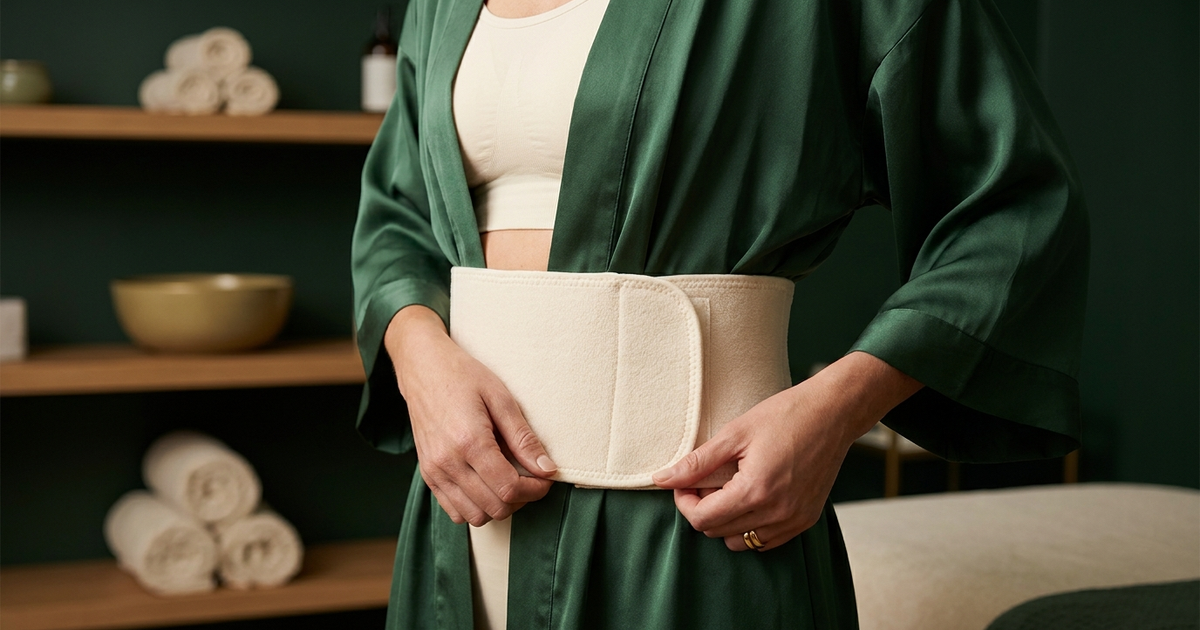
The garment (often called a faja) is worn 24 hours a day for 4 to 8 weeks. It controls swelling, presses the healing tissue smoothly back onto the muscle and helps prevent fibrosis.
By supporting the treated areas, it also makes moving around in the first weeks more comfortable.
In Dr. Paulo Michels’ practice
Dr. Paulo Michels performs liposuction at Elyzee Hospital in Abu Dhabi, and he plans pain control into the operation rather than leaving it to tablets afterwards. In every case he performs ultrasound-guided anaesthetic nerve blocks during the procedure, placing the numbing medication directly onto the nerves that supply the treated area. The aim is deep local relief that carries into the first days of recovery, with as little systemic pain medication as possible.
He combines the tumescent technique with VASER because both reduce bleeding, bruising and tissue trauma — and less trauma means less to recover from. The anaesthesia pathway and whether you stay overnight are decided by the volume of fat to be removed: general anaesthesia for most body-contouring cases, local anaesthesia with IV sedation for some smaller ones.
After surgery he asks for the same three things from every patient: walking from day one, the compression garment day and night for 4 to 8 weeks, and early lymphatic drainage. The questions patients typically ask him are how much it will hurt, when they can return to work, and whether they will need to stay in hospital.
What can you do to make recovery more comfortable?
Three habits make the biggest difference. Wear the compression garment exactly as instructed. Walk early and often; gentle movement helps the fluid settle and keeps you feeling like yourself. And keep your follow-up visits, so the team can confirm everything is settling as expected and adjust your plan — medication, garment, activity — to how your body is actually healing.
Patients from Abu Dhabi and Dubai are seen and operated on at Elyzee Hospital in Abu Dhabi — a dedicated page explains how patients from Dubai are seen. If you are weighing up the procedure, you can also read how long liposuction results last, or book a consultation to have your questions answered in person.
Related procedureRead the full procedure page →
For patients in DubaiLiposuction in Dubai →