Upper Belly Bulge After a Tummy Tuck: Skin, Fat or Muscle?
Medically reviewed by Dr. Paulo Michels — 2 November 2026· Updated 2 November 2026
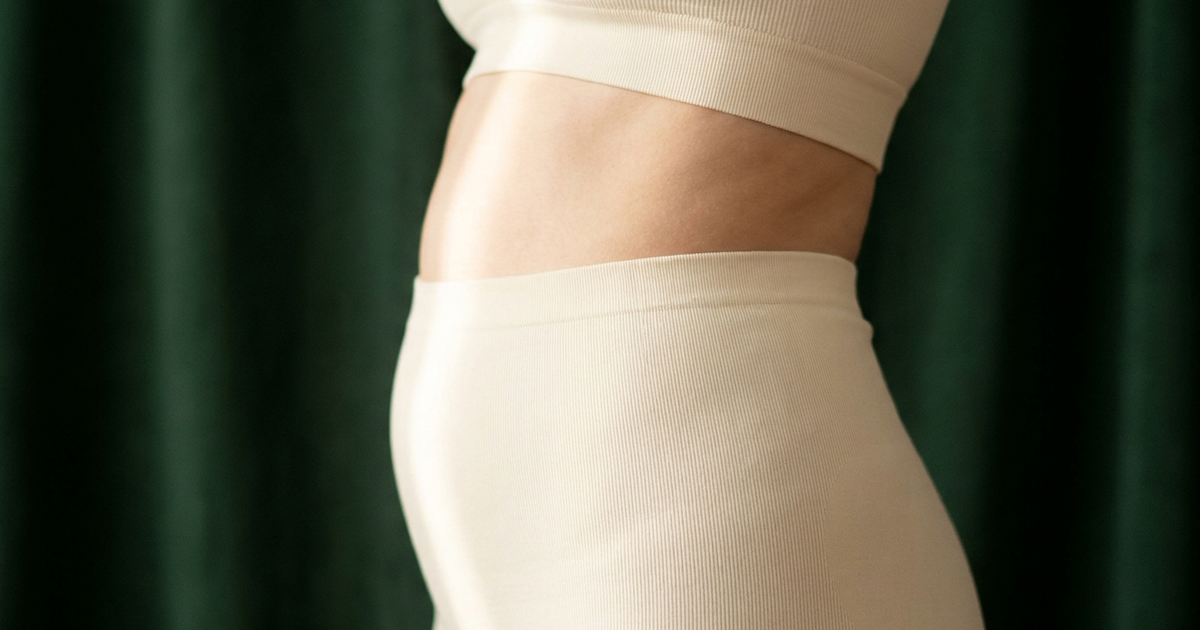
A bulge that remains in the upper abdomen after a tummy tuck is almost always one of three things: loose skin that the low incision could not reach, a residual layer of fat, or a muscle separation above the navel that was not closed. Each has a different correction — a reverse tummy tuck for skin, liposuction for fat, an upper muscle repair for the gap — so the examination matters far more than the name of the operation. Dr. Paulo Michels assesses and treats residual upper-abdominal contour problems at Elyzee Hospital in Abu Dhabi, for patients from Dubai and across the UAE.
Why does the upper abdomen still bulge after a tummy tuck?
A standard tummy tuck pulls the abdominal skin downwards and removes the excess at a low scar above the pubic area. That direction of pull is ideal for the lower abdomen: the C-section overhang, the stretch marks below the navel, the hanging apron after weight loss. Its effect weakens with distance, and by the time the tension reaches the area just beneath the ribs there is often very little tightening left.
So an upper abdomen that was loose, fatty or domed before surgery can still be loose, fatty or domed afterwards, even when the operation itself was performed well and the lower abdomen looks flat. The contrast can make the upper bulge look worse than it did before, simply because everything below it is now smooth.
Before concluding that something is wrong, one explanation has to be excluded first: swelling. The upper abdomen is the last area to settle after an abdominoplasty, and tissues there can stay firm and full for months. A contour judged in the early weeks is not the final contour, and no revision should be planned on it.
Is the bulge loose skin?
Loose skin behaves in a recognisable way. It folds and wrinkles when you sit down, lean forward or bend sideways, and it flattens out again when you stand tall and stretch upwards. It often looks crepey rather than round, the surface is finely wrinkled, and you can lift it away from the body between two flat hands rather than pinching a thick pad.
This is the pattern a reverse tummy tuck was designed for. Instead of pulling downwards, the skin of the upper abdomen is lifted upwards and the excess is removed through an incision in the inframammary fold, the natural crease beneath the breasts. In women the scar is concealed by a bra or bikini top; where the two folds are joined across the breastbone the scar is more visible in low-cut clothing, and that trade-off is discussed openly before anything is agreed.
A mini reverse tummy tuck uses only a short segment of the fold, usually the central or inner part, and suits mild laxity confined to a band just below the breasts in patients with good skin quality. The belly button generally stays where it is, because the skin is lifted from above rather than redraped around the navel.
The combination that makes the most sense is a reverse tummy tuck with a breast lift, reduction or augmentation. Those operations already use an incision in the breast fold, so the upper abdomen can be tightened through the same scar with no additional incision — a common request after pregnancy or weight loss, when the breasts and the upper abdomen have both lost their support.
Is the bulge fat?
Fat does not change with position. It stays as a pinchable layer whether you are standing, sitting or lying down, the skin surface over it is smooth rather than crepey, and squeezing it gives a thick, soft roll rather than a thin fold.
This is a job for liposuction, not for another excisional operation. Liposuction of the upper abdomen and flanks can also be used alongside a reverse tummy tuck, both to refine the contour and to release the skin so that it lifts evenly; in very lean patients little or none is needed.
One distinction has to be made at this point. Fat that lies deep around the organs cannot be reached by liposuction of any kind. An abdomen that is hard and round rather than pinchable, and that does not soften when you lie flat, usually points in that direction, and the honest answer is that no operation will correct it — it responds to weight reduction, not surgery. Telling the two apart is part of the assessment, not something to decide from photographs.
Is the bulge muscle?
The third pattern is the one most often missed. Separation of the rectus muscles — diastasis recti — can extend above the navel, and if the repair performed at the first operation stopped short, or if the upper portion stretched again, the abdominal wall bulges outward under its own pressure.
The giveaway is doming along the midline. Lying on your back and lifting your head and shoulders off the couch produces a visible ridge running up the centre of the upper abdomen, which flattens when you relax. The bulge is worse at the end of the day and after meals, and it does not fold like skin or pinch like fat.
Correction depends on where the gap sits. When the separation is confined to the area above the navel, the upper part of the rectus muscles can be brought together through the breast-fold incision of a reverse tummy tuck. When it extends below the belly button, which is the usual pattern after pregnancy, the whole length needs to be treated — through a full abdominoplasty, or through MILA, Dr. Michels’ minimally invasive endoscopic muscle repair, which works through small access points rather than a long incision.
How is the cause actually identified?
By examination first: the abdomen is assessed standing, sitting and lying, with and without a head-lift, so that skin behaviour, fat thickness and midline doming can each be seen separately. Where useful, ultrasound is added to measure the fat layer, to look at the muscle edges and to confirm whether a gap is present and over what length.
It is common for more than one cause to be present. A patient may have a thin layer of residual fat over a muscle gap, with loose skin on top of both. In that case the plan addresses them in one operation — liposuction to thin the layer, repair to close the gap, excision to remove the skin — rather than treating one and hoping the rest improves.
When can a revision be considered?
Not while the first operation is still settling. Revision planning is only meaningful once the swelling has fully resolved, the scar has matured and body weight has been stable, because loose skin, fat and muscle all look different in a swollen abdomen. A significant weight change, or a pregnancy, after the assessment will change the plan again, which is why surgery of this kind is best timed once family planning is complete.
Recovery from a reverse tummy tuck is generally less demanding than the original abdominoplasty. Most patients return to desk work in about 7 to 10 days, wear a compression garment for 4 to 6 weeks, start light cardio after 3 to 4 weeks and return to full exercise at around 6 weeks. A mini reverse tummy tuck is usually quicker. When a breast lift is performed at the same time, the two recoveries run in parallel and the overall timeline is essentially unchanged.
In Dr. Paulo Michels’ practice
Dr. Paulo Michels treats the identification of the cause as the operation’s most important step: loose skin responds to a reverse tummy tuck, fat responds to liposuction, and a persistent muscle gap needs a repair, and choosing the operation for the wrong finding is in his view the commonest reason for a disappointing abdominal result.
Where the breast fold is involved, he anchors it to the deep tissues over the ribs so that the upward pull cannot raise or distort it — a reverse tummy tuck does not lift the breasts, and if the breasts have dropped he performs a breast lift in the same operation rather than relying on the abdominal pull. When the dissection is limited he uses progressive tension sutures to close the space where fluid would collect, allowing a drainless recovery; after more extensive combined procedures a drain may be used for a few days. Nerve blocks are placed under ultrasound guidance before the patient wakes.
He advises against a reverse tummy tuck when the main problem is the lower abdomen, when the bulge is fat or muscle rather than skin, in active smokers, when substantial weight loss is still planned, and in most men, who have no natural breast fold to hide the scar. The questions patients ask him most often are where the scar will sit across the breastbone, whether the belly button will move, and whether the upper abdomen can be corrected at the same time as breast surgery.
When should you contact the surgeon?
If you are in the weeks following any abdominal procedure, contact the team at Elyzee Hospital promptly rather than waiting for a scheduled appointment if you notice:
- A sudden increase in swelling of the abdomen or under the breasts, or an area that becomes firm, tense or visibly larger than the other side
- Fluid leaking from an incision, or a soft area that feels like liquid moving under the skin
- Spreading redness, increasing warmth or new discharge around the scar
- A wound edge that opens or separates
- Pain that is increasing rather than steadily improving, or that is not controlled by the prescribed medication
- New swelling, tightness or discomfort in one calf or leg, or breathlessness
These are observations to report, not diagnoses to make. A quick message with a photograph is always preferable to waiting.
If you are months or years past your tummy tuck and the upper abdomen has never looked right, the useful next step is an assessment that separates skin, fat and muscle. Consultations and surgery with Dr. Paulo Michels take place at Elyzee Hospital in Abu Dhabi, and visits are grouped where possible for patients travelling from Dubai and the rest of the UAE.
Related procedureRead the full procedure page →
For patients in DubaiTummy tuck in Dubai →