Blepharoplasty Recovery Day by Day: Swelling, Bruising, Screens and Makeup
Medically reviewed by Dr. Paulo Michels — 23 July 2026· Updated 23 July 2026
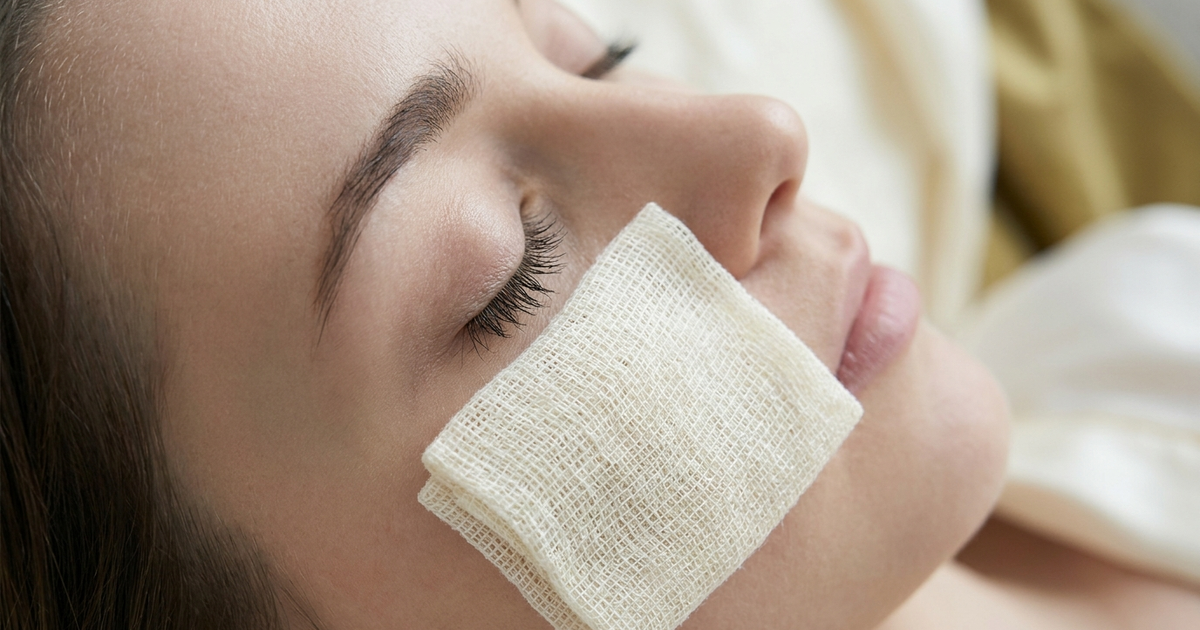
Blepharoplasty recovery follows a remarkably predictable arc: swelling and bruising build in the first days and look their worst early, then fade steadily through the first week; sutures come out between day three and day seven; by around day twenty most patients feel comfortable in social situations; and complete healing takes about three months. This guide walks through that arc day by day — including the questions patients actually ask, about screens, reading, makeup and dark glasses — as Dr. Paulo Michels manages eyelid surgery (blepharoplasty) recovery at Elyzee Hospital in Abu Dhabi, for patients from Abu Dhabi & Dubai and across the UAE. As with every recovery article, your own eyelids follow their own schedule — the timings here describe the typical pattern, and your follow-up visits are where your individual progress is judged.
What happens on surgery day and the first night?
Blepharoplasty is performed under local anaesthesia with sedation or general anaesthesia, depending on the extent of the correction and your preference. The surgery itself typically lasts one to two hours, and you go home the same day.
That first evening sets the tone for the whole first week, and it is built around three simple habits:
- Head elevation. Sleep with your head propped on an extra pillow or two. Gravity is either your ally or your enemy in eyelid surgery — elevated, fluid drains away from the lids; flat, it pools there overnight.
- Cold compresses. Cool compresses around (not pressing on) the eyes in the early days help limit how far the swelling climbs. Your team will show you exactly how and how often — follow their protocol rather than improvising.
- Rest without straining the eyes. The first night is for dozing, podcasts and conversation — not for catching up on a series with your face lit by a screen.
Some tightness, mild soreness and a sensation of heaviness in the lids are all expected. Vision can be slightly blurry from ointment and swelling — that is normal on day one.
What do days one to three look like?
These are the honest days — the ones the mirror handles least kindly. Swelling and bruising are common in the first week, and they tend to look their most dramatic early before they begin to fade. Bruising around the eyes can be colourful; eyelid skin is the thinnest on the body, and it shows every stage of a bruise clearly. None of this reflects the final result any more than a construction site reflects the finished building.
Practical rhythm for these days:
- Keep using cold compresses as instructed while the swelling is on its way up.
- Stay elevated whenever you rest, including for daytime naps.
- Walk around the house regularly — gentle movement helps circulation and healing — but avoid bending forward, lifting or anything that makes your face feel pressurised.
- In the UAE this also means staying in air-conditioned comfort. Heat makes swelling worse, and midsummer sun on healing eyelids is off the table anyway.
Watering eyes, mild dryness, or a gritty feeling are common early companions and usually settle as the lids recover their normal blink and closure.
When can you look at screens and read again?
This is the question modern patients ask before almost any other, and the honest answer is: in moderation, sooner than you might fear — but less than you probably want.
Screens and reading do not damage the surgical result. The issue is that concentrated visual work reduces your blink rate, which dries the eyes at exactly the moment they are already prone to dryness, and long sessions can leave the lids feeling strained and heavier. So the sensible pattern in the first days is short bursts: messages and a quick scroll rather than a three-hour film; audiobooks doing the heavy lifting; the screen put down the moment the eyes feel tired or dry. From there, most patients ramp up naturally over the first one to two weeks as comfort returns. Your own eyes are the gauge — comfort is permission, strain is a stop sign.
When are the sutures removed?
Sutures are usually removed between three and seven days after surgery, depending on your individual case. This visit is a genuine milestone: the lids feel freer without them, and it is typically when your surgeon reviews the incision lines — which, in upper blepharoplasty, sit hidden along the natural eyelid crease, and in lower blepharoplasty just below the lash line or internally, depending on the surgical plan.
It is also the visit where your personal green lights start being issued — for washing the area normally, for gradually resuming more activity, and for the timeline toward makeup.
What happens in week two and beyond — and when do you look “normal”?
Through the second week, the transformation accelerates. The bruising works through its colour changes and fades; the swelling deflates unevenly — often one eye is a day or two behind the other, which is normal, not asymmetry in the result.
By around twenty days after surgery, healing becomes visibly apparent and most patients feel comfortable resuming social activities. This is the practical “back to normal life” milestone: the point where colleagues notice you look well rested rather than noticing you had surgery. Until then, sunglasses are the blepharoplasty patient’s best friend — they hide the healing, and they protect the delicate skin from the Gulf sun, which is strong in every month of the year.
If your work is desk-based, many patients return within the first week to ten days, screens managed as described above; the exact timing is a conversation with your surgeon, shaped by how you heal and what your job demands of your eyes.
When can you wear makeup again?
Not until the incision line is fully closed — that is the rule, and it is worth respecting completely. Makeup particles pressed into an incision that has not finished sealing can irritate it and work against the fine, hidden scar the surgery was designed to produce. The same applies to makeup removers, which involve rubbing exactly where you should not rub.
Because suture removal happens between day three and day seven and skin sealing continues after that, the green light for eye makeup is given individually, at follow-up, once your surgeon confirms the incision is fully closed. When it comes, start gently: clean brushes, fresh products (old mascara is a bacterial reservoir), and a light touch along the lash line. Concealer on the surrounding skin — away from the incision — is often approved earlier than eyeliner or shadow on the lid itself; ask specifically rather than assuming.
When do you see the final result?
Complete healing takes around three months for most patients. The refreshed shape is visible much earlier — from the second and third week onward, as swelling retreats — but the last traces of firmness along the incision and the final settling of the lid contour take those full three months. For patients over 60, smokers, or those with certain health conditions, complete healing can extend up to a year.
The reward for that patience is durable: blepharoplasty results can last between ten and fifteen years, depending on lifestyle, skin type, genetics and post-operative care. Because ageing continues, some patients later maintain the result with complementary non-surgical treatments — and some, whose tired look involves the brow position or deeper facial descent rather than only the lids, are better served by discussing an eyebrow lift or a deep plane facelift alongside or instead of eyelid surgery. That distinction is anatomical and belongs in consultation.
When should you contact your surgeon?
Almost everything described above — swelling, bruising, watering, tightness, temporary blurriness from ointment — is the normal noise of eyelid healing. A short list of observable signs deserves a same-day call instead of watchful waiting:
- Bleeding from the incision that does not settle with gentle pressure
- Swelling that increases suddenly, or is markedly greater on one side
- Spreading redness around the incision, or discharge from it
- Wound edges that appear to be opening after the sutures are out
- Increasing pain rather than steadily decreasing discomfort
- Any new or worsening problem with your vision — this one warrants contacting the clinic immediately, not at the end of the day
- Feeling increasingly unwell rather than gradually better
None of these automatically means something is wrong, but each deserves a prompt conversation. Dr. Michels’ team would always rather hear from you early and reassure you than hear from you late.
A short recovery, measured in patience
Blepharoplasty asks for a genuinely short recovery by surgical standards — sutures out within a week, social life back within three — but it rewards patients who respect the quiet rules of the early days: elevation, cold compresses, screens in moderation, no makeup until the incision has fully closed, and sunglasses against the UAE sun. In consultation at Elyzee Hospital in Abu Dhabi — where patients travel from Abu Dhabi & Dubai alike — Dr. Paulo Michels plans whether your case calls for upper, lower or combined blepharoplasty, and follows your eyelids through every one of these days personally.
Related procedureRead the full procedure page →
For patients in DubaiBlepharoplasty in Dubai →