Breast · Abu Dhabi & Dubai
Breast Implant Removal (Explant)
Medically reviewed by Dr. Paulo Michels, Board-Certified Plastic Surgeon· Updated 10 September 2026
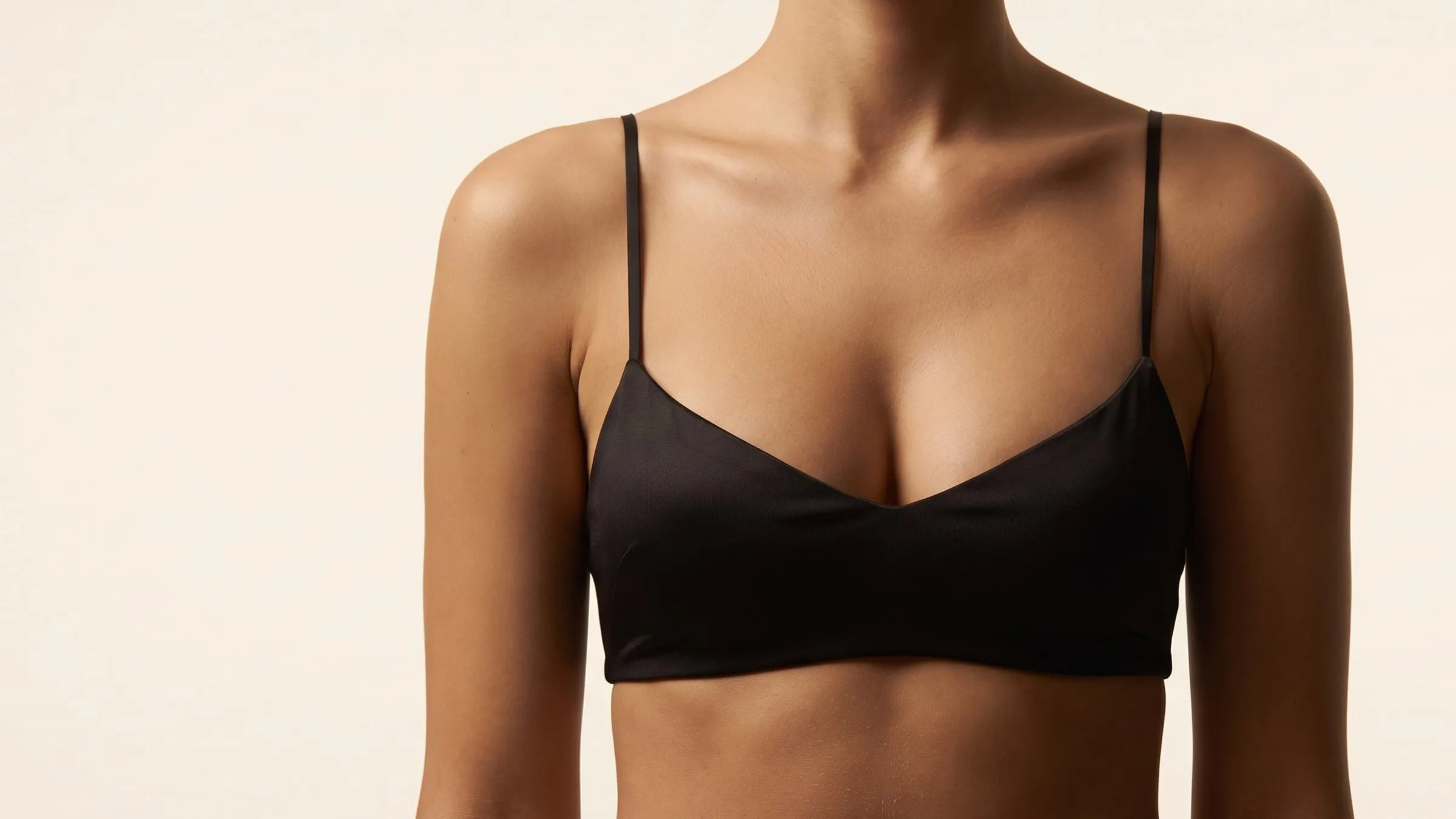
Breast implant removal — explant surgery — takes out breast implants permanently, with or without the surrounding scar-tissue capsule, and can be combined with a breast lift or fat transfer so the breasts keep a natural shape without implants. Dr. Paulo Michels performs explant surgery at Elyzee Hospital in Abu Dhabi for patients from Dubai and across the UAE, choosing between simple removal, total or en bloc capsulectomy, explant with mastopexy and hybrid fat transfer according to each patient's reason for removal, capsule condition and tissue quality.
More women than ever are choosing to remove their breast implants — because they no longer want them, because a complication has developed, because their body or life has changed, or because they want to end the cycle of future surgeries. As a breast specialist in Abu Dhabi, Dr. Paulo Michels approaches explant surgery with the same planning discipline as a first augmentation: the goal is not simply to take the implants out, but to leave the breasts looking natural, balanced and supported without them. Every explant is planned around three questions — why the implants are coming out, what condition the capsule is in, and what the breast will look like once the volume is gone.
Why do women remove their breast implants?
There is no single reason, and the reason matters because it changes the operation. The common ones:
- A change of mind. Preferences change over a decade or two — many women want a smaller, softer, more natural breast than the one they chose at 25, or simply want to be implant-free.
- Capsular contracture. The scar-tissue capsule around the implant tightens, making the breast firm, high, round or painful. This is the most common medical reason for removal or revision.
- Rupture or leakage. Modern cohesive silicone ruptures are usually silent and found on imaging; saline rupture shows as a visible deflation.
- Malposition and bottoming out. Implants that have dropped below the fold, drifted to the sides or merged towards the middle.
- Discomfort, heaviness or back and shoulder strain from large implants.
- Symptoms attributed to the implants — the group of complaints patients call breast implant illness.
- A rare implant-associated condition such as BIA-ALCL, which requires removal with a complete capsulectomy.
- Ending the replacement cycle. Implants do not expire on a schedule, but some women prefer a permanent solution over lifelong follow-up.
If your reason is simply that you want them out, that is reason enough. You do not need a complication to justify the decision.
What are the options at explant surgery?
Explant is a family of operations, not a single procedure. Dr. Michels chooses among them based on your anatomy and the imaging findings:
| Option | What it involves | Best suited to |
|---|---|---|
| Removal alone | Implants removed through the existing scar; capsule left in place | Thin, healthy capsules; smaller implants; patients wanting the simplest operation |
| Removal with partial capsulectomy | The accessible or abnormal part of the capsule is removed | Moderately thickened capsules; capsule adherent to the chest wall in places |
| Removal with total capsulectomy | The whole capsule is removed, usually opened during dissection | Contracture, calcification, old implants, patient preference for complete removal |
| En bloc capsulectomy | Implant and intact capsule removed together as one sealed unit | Rupture, thick or calcified capsule, suspected implant-associated disease |
| Explant with mastopexy (explant-lift) | Removal plus a breast lift secured with the autologous Internal Bra | Stretched skin, low nipple position, large or long-standing implants |
| Explant with fat transfer | Removal plus grafting of your own fat to restore modest volume | Women who want some fullness without an implant |
| Explant with replacement | Removal and immediate exchange for a new implant | Patients who want to keep volume — see the guide to breast implant revision and replacement |
Combinations are common: an explant-lift with fat transfer, for instance, restores shape, position and a soft upper pole in a single operation.
Do I need a capsulectomy, and does it have to be en bloc?
The capsule is the thin layer of scar tissue the body builds around any implant. It is normal, and in many women it is thin, soft and harmless. Whether it should be removed depends on its condition:
- A thin, healthy capsule does not have to be removed. Leaving it in place avoids extra dissection against the ribs and muscle, less bleeding and no drain. It shrinks and is reabsorbed over time.
- A thick, contracted or calcified capsule is removed, because it would otherwise remain as a firm, sometimes visible shell and can trap fluid.
- A ruptured implant is best removed with the capsule intact around it, so free silicone gel is contained and not spread into the pocket.
- A suspected implant-associated condition — most importantly BIA-ALCL — requires complete removal of implant and capsule together.
“En bloc” has become a widely searched term, and it is worth being precise about it. En bloc means removing the implant sealed inside its intact capsule, without opening the capsule at any point. It is the correct technique in the situations above. It is not automatically better in every case: when the capsule is paper-thin and adherent to the chest wall, an en bloc dissection can only be achieved by removing healthy tissue, with more bleeding and a higher chance of injury to the muscle, ribs or lining of the chest. In that anatomy a meticulous total capsulectomy — removing the whole capsule, even if it opens during the dissection — reaches the same end point more safely. Dr. Michels tells you before surgery which technique your imaging and examination support, and why.
Whenever the capsule is removed for a clinical reason, it is sent for pathology examination. The removed implants are documented and returned to you if you wish.
Will my breasts sag after the implants come out?
This is the question that matters most to almost every patient, and the honest answer is: it depends on the balance between the volume that leaves and the skin and tissue that remain.
Three factors predict the result. How much natural breast tissue you have — a woman who started with a small A cup and a 400 cc implant is left with far less than one who started with a full B and a 250 cc implant. How much the skin has stretched — large implants, many years in place, pregnancies and weight change all loosen the envelope. And where the nipple sits — if it is already at or below the breast fold, removing volume will leave it lower still.
In practice this means three groups. Women with good elasticity, modest implants and a nipple above the fold often look natural after removal alone, and the breast tightens further over the following months. Women in the middle may be offered fat transfer to soften the upper breast. Women with stretched skin, a low nipple or large implants almost always need a lift at the same time — a removal alone in this group produces the deflated, empty appearance that fuels the “explant regret” stories online. Dr. Michels uses 3D simulation and direct examination at the consultation to tell you plainly which group you are in, so the decision is made with open eyes.
How is an explant-lift (explant mastopexy) planned?
When a lift is indicated, the operation combines the removal with a mastopexy in one session. After the implants — and the capsule, if required — are removed, the remaining breast tissue is reshaped, the nipple is raised to its correct position and excess skin is removed. The incision pattern follows the degree of sagging, exactly as in a breast lift: around the areola for mild ptosis, a vertical lollipop for moderate, an anchor for severe.
Two techniques distinguish Dr. Michels’ approach to the explant-lift:
The autologous Internal Bra. Rather than inserting synthetic mesh, he uses your own fascia and muscle to create an internal supporting sling that holds the lifted breast in place. Without an implant to provide structure, this internal foundation is what keeps the result from settling — the full technique is explained on the Internal Bra breast lift page.
Auto-augmentation. Where the lower breast tissue is generous, instead of discarding it he repositions it higher on the chest wall, restoring upper-pole fullness from your own tissue — the projection of a small implant, without one.
Can fat transfer restore the volume?
For women who want some fullness without an implant, fat grafting is the natural companion to explant surgery. Fat is harvested by gentle liposuction from the abdomen, flanks or thighs, purified and injected in fine layers into the upper breast and cleavage. It softens the transition at the top of the breast and adds a modest, natural volume.
Expectations must be realistic. Fat cannot replicate a large implant in one session, the amount that can be grafted is limited by the recipient tissue, and typically 60 to 80 per cent of the transferred fat survives permanently once the swelling resolves. Some patients choose a second session after several months. The result is soft, moves naturally and is entirely your own tissue.
What about breast implant illness?
Breast implant illness (BII) is the term patients use for a cluster of systemic symptoms — fatigue, brain fog, joint and muscle pain, hair loss, rashes, anxiety, sleep disturbance — that they attribute to their implants. It is not currently an official medical diagnosis, there is no laboratory test for it, and research into its mechanism is ongoing.
That does not mean the symptoms are not real, and they are taken seriously here. Many women report improvement after explantation, and a woman who believes her implants are affecting her health has a legitimate reason to remove them. What Dr. Michels will not do is promise a cure: symptoms with another underlying cause may persist, and a full medical work-up alongside the surgical plan is always recommended. The explant itself is planned in the same way as for any other reason, with the capsule removed when its condition warrants it.
What is BIA-ALCL, and how is it handled?
Breast implant-associated anaplastic large cell lymphoma is a rare cancer of the immune system that arises in the capsule around an implant, associated predominantly with certain textured-surface implants. Its typical sign is a late, one-sided swelling of the breast — years after surgery — caused by a fluid collection around the implant; sometimes a lump or firmness. Evaluation is by ultrasound and analysis of the fluid. When confirmed, the treatment is removal of the implant with a complete en bloc capsulectomy, which is curative in the large majority of cases when caught early. It is rare, and it is not a reason for a woman without symptoms to remove her implants — but it is why any new swelling of one breast should be examined rather than watched.
What does the consultation involve?
Explant planning starts with understanding your reason for removal and what you want the breasts to look like afterwards. Dr. Michels examines the breasts and skin quality, measures the nipple position relative to the fold, reviews your implant records where available, and arranges imaging — ultrasound routinely, MRI when rupture is suspected or implants are old. 3D simulation shows what removal alone would look like on your body compared with an explant-lift or fat transfer. The plan, the incisions, whether the capsule will be removed and how, and whether a drain might be needed are all agreed before surgery day.
What about safety and anaesthesia?
All explant surgery is performed under general anaesthesia in the JCI-accredited surgical theatres of Elyzee Hospital in Abu Dhabi, with board-certified anaesthesiologists monitoring you throughout. Every case includes ultrasound-guided nerve blocks — long-acting local anaesthetic placed around the nerves supplying the chest before you wake — so the first days are comfortable without heavy opioid painkillers. Operating time is roughly one hour for removal alone and two to three hours when capsulectomy, a lift or fat transfer are combined. Most patients go home the same day or after one night, depending on the extent of surgery.
What is the recovery timeline?
| Phase | Removal alone / with capsulectomy | Explant with lift or fat transfer |
|---|---|---|
| Days 1–3 | Mild to moderate discomfort, swelling; compression bra day and night | Moderate tightness; breasts high and firm; compression bra day and night |
| Week 1 | Shower from day 1–2; light walking; desk work possible by day 5–7 | Desk work and driving from day 7–10 once off prescription painkillers |
| Weeks 2–4 | Bruising fades; swelling settling | Swelling reduces; incisions maturing; no upper-body training |
| Weeks 4–6 | Compression bra can be stopped; light cardio | Light cardio at 3–4 weeks; compression bra until week 4–6 |
| 6 weeks + | Full exercise | Full exercise; breasts settle into final shape over 3–6 months |
Fat-transfer patients also wear a light compression garment over the liposuction donor areas for a few weeks. Scars mature over 12 to 18 months; sun protection and the scar-care routine explained at follow-up make a real difference to the final line.
What are the risks?
Every breast operation carries risks — bleeding, infection, fluid collection (seroma), altered nipple sensation, asymmetry, delayed wound healing — and they are minimised with meticulous technique and a hospital setting. The risks specific to explant are two: injury to the chest wall during an aggressive capsulectomy, which is why en bloc is reserved for the cases that need it; and aesthetic disappointment when a needed lift is declined, which is why the honest conversation about sagging happens before surgery, not after.
Why choose Dr. Paulo Michels for explant surgery?
Dr. Michels is a Brazilian board-certified plastic surgeon with over 18 years of experience in breast surgery — augmentation, lift, reduction, revision and removal — and a member of ISAPS, ASPS and the Brazilian Society of Plastic Surgery. He was awarded the Gold Medal for Best Body Contouring at the World Plastic Surgery Olympiads 2025. Explant surgery draws on every part of that breast experience: judging the capsule, removing it safely, and reconstructing a natural breast with the patient’s own tissue. All surgery takes place at Elyzee Hospital in Abu Dhabi, and patients from Dubai and across the UAE are seen routinely, with visits grouped to minimise travel.
Questions, answered
Breast Implant Removal (Explant) in Abu Dhabi — your questions
What is breast implant removal (explant surgery)?+
Explant surgery is the permanent removal of breast implants placed during a previous augmentation or reconstruction. Depending on the reason for removal, the surgeon may also remove the scar-tissue capsule that forms naturally around every implant (capsulectomy) and reshape the breast with a lift or fat transfer so the result looks natural without implants.
Why do women decide to remove their breast implants?+
The common reasons are a change in personal preference or lifestyle, capsular contracture, implant rupture, malposition or bottoming out, discomfort or heaviness, symptoms the patient attributes to the implants (breast implant illness), a wish to stop the cycle of future replacements, and — rarely — a diagnosed implant-associated condition. There is no wrong reason: wanting your implants out is sufficient.
Do I need to remove my implants after 10 years?+
No. Modern cohesive silicone implants have no fixed expiry date and are only removed or replaced when there is a reason — rupture, severe capsular contracture, a change in shape, or a change in what you want. Long-term follow-up with periodic examination and imaging matters far more than a calendar date.
Will my breasts sag or look deflated after implant removal?+
It depends on how much natural tissue you have, how large the implants were, how long they were in place and how much your skin has stretched. Women with good skin elasticity and small implants often look natural after removal alone; women with large implants, stretched skin or a low nipple usually need a lift (mastopexy) at the same time to avoid a deflated, sagging appearance. Dr. Michels tells you honestly which group you are in before surgery.
What is a capsulectomy?+
A capsulectomy is the removal of the fibrous scar-tissue capsule that the body forms around every breast implant. A total capsulectomy removes the whole capsule; a partial capsulectomy removes part of it; an en bloc capsulectomy removes the intact capsule with the implant still inside, without opening it. Whether the capsule needs to come out — and how — depends on its condition and your reason for surgery.
What is en bloc capsulectomy and do I need it?+
En bloc removal takes the implant and its capsule out together as one sealed unit, without cutting into the capsule. It is recommended when the capsule is thick, calcified or contracted, when an implant has ruptured, and when an implant-associated condition such as BIA-ALCL is suspected. When the capsule is thin, healthy and stuck to the chest wall or ribs, forcing an en bloc dissection can damage healthy tissue for no benefit — in those cases a careful total capsulectomy achieves the same goal more safely. Dr. Michels explains which applies to you.
Can I have a breast lift at the same time as implant removal?+
Yes. Explant with mastopexy (explant-lift) is the most common combination: the implants and capsule are removed and the remaining breast tissue is lifted, reshaped and secured with the autologous Internal Bra so the breast holds a natural shape without an implant. Where the lower breast tissue is generous, an auto-augmentation mastopexy repositions your own tissue to restore upper-pole fullness.
Can fat transfer replace the volume of my implants?+
Partly. Fat grafting uses your own purified fat, harvested by liposuction, to soften the upper breast and restore some fullness after explant. It cannot replicate the volume of a large implant in a single session, and typically 60 to 80 per cent of the transferred fat survives long-term, but for women who want a modest, natural volume without an implant it is an excellent option — alone or combined with a lift.
What is breast implant illness (BII)?+
Breast implant illness is the term patients use for a cluster of systemic symptoms — fatigue, brain fog, joint and muscle pain, rashes, anxiety — that they attribute to their implants. It is not yet an official medical diagnosis and there is no test for it, but the symptoms are real to the women reporting them, they are taken seriously here, and many patients report improvement after explantation. Dr. Michels discusses realistic expectations openly: removal is reasonable if you want it, but it cannot be promised as a cure.
What is BIA-ALCL?+
Breast implant-associated anaplastic large cell lymphoma is a rare cancer of the immune system that develops in the scar-tissue capsule around an implant, associated mainly with certain textured-surface implants. The typical sign is a late swelling of one breast caused by fluid around the implant, usually years after surgery. It is evaluated with ultrasound and analysis of the fluid, and when confirmed the treatment is removal of the implant with a complete en bloc capsulectomy. It is rare — but it is one reason a new, one-sided swelling should always be examined.
Is explant surgery more difficult than getting implants?+
Removal alone is usually a shorter, simpler operation than the original augmentation. Explant with a total or en bloc capsulectomy, a lift or fat transfer is longer and more technical, because the surgeon is working through scar tissue and reshaping a breast that has been stretched by an implant. Operating time ranges from roughly one to three hours depending on what is combined.
Will I have new scars?+
Removal and capsulectomy are usually done through the existing scar in the fold beneath the breast, which is lengthened slightly if the capsule is removed intact. If a lift is added, the incision pattern follows the degree of sagging — around the areola, a vertical lollipop, or an anchor — exactly as in a standard mastopexy. Dr. Michels closes the skin with cyanoacrylate surgical glue for the finest possible scar line.
Where does Dr. Paulo Michels perform explant surgery?+
All consultations and surgery take place at Elyzee Hospital in Abu Dhabi, a fully licensed private hospital with JCI-accredited surgical theatres, under general anaesthesia administered by board-certified anaesthesiologists. Dr. Michels does not operate elsewhere.
Do you see explant patients from Dubai?+
Yes. Patients from Dubai and across the UAE are seen routinely at Elyzee Hospital in Abu Dhabi — about an hour's drive. Where possible the consultation, imaging, pre-operative tests, surgery and follow-up reviews are grouped to reduce the number of journeys.
What happens to the removed implants and capsule?+
The implants are documented (manufacturer, model and serial number, if available) and you may keep them if you wish. When a capsule is removed for a clinical reason — contracture, rupture, suspected implant-associated disease or unusual appearance — it is sent for pathology examination. The results are reviewed with you at follow-up.
How long is the recovery after breast implant removal?+
For removal alone or with capsulectomy, most patients are comfortable within days and back at desk work in 5 to 7 days. When a lift is included, the timeline follows a mastopexy: light activity immediately, driving and office work in one to two weeks, gentle cardio at 3 to 4 weeks and unrestricted exercise at about 6 weeks, with a compression bra worn for the first 4 to 6 weeks.
Are drains used?+
Dr. Michels performs breast surgery without drains wherever the technique allows, using precise dissection and tension suturing. After a total capsulectomy — where a larger raw surface is left behind — a drain may occasionally be used for a short period to reduce the risk of fluid collection. If one is needed, you are told before surgery.
Is the surgery painful?+
Discomfort is generally moderate and well controlled. Every case includes ultrasound-guided nerve blocks placed by the anaesthesiologist, so you wake up comfortable and rarely need strong opioid painkillers. Most patients describe tightness rather than pain, especially when a lift is included.
How long does it take for the breasts to look natural after explant?+
Swelling settles over the first weeks, and the skin and tissue continue to retract and soften for three to six months. If a lift was performed, the breasts initially sit high and firm and settle into their final natural position over the same period.
Can I have new implants placed later if I change my mind?+
Usually yes. A future augmentation remains possible after healing, although the tissue may have changed. Many women who explant, however, choose to keep their natural result — and those who want lasting volume without an implant can consider fat transfer.
Do I need imaging before explant surgery?+
Yes. Ultrasound — and MRI when rupture is suspected or the implants are old — shows whether an implant has ruptured, whether there is fluid around it, and how thick or calcified the capsule is. This determines whether a capsulectomy is needed and how it should be performed, and it forms part of your surgical plan.
What are the risks of breast implant removal?+
As with any breast surgery: bleeding, infection, fluid collection (seroma), changes in nipple sensation, asymmetry, delayed healing and unsatisfactory shape. The specific risk of explant is aesthetic disappointment when a needed lift is declined, which is why Dr. Michels is direct about what removal alone will and will not look like on your anatomy.
Is breast implant removal covered by insurance?+
Removal for aesthetic or personal reasons is self-funded. Removal for a documented complication — rupture, severe contracture or a confirmed implant-associated condition — may be considered by some insurers on a case-by-case basis. Costs are individual and quoted after the consultation once the plan is defined.
For patients in DubaiBreast surgery for patients in Dubai →
Take the first step
Ask about breast implant removal (explant)
Keep reading