Breast condition · Abu Dhabi & Dubai
Sagging Breasts (Breast Ptosis)
Also known as: saggy breasts · droopy breasts · breast ptosis · breasts hanging low · nipples pointing down · loss of breast firmness · mastoptosis
Medically reviewed by Dr. Paulo Michels, Board-Certified Plastic Surgeon· Updated 29 September 2026
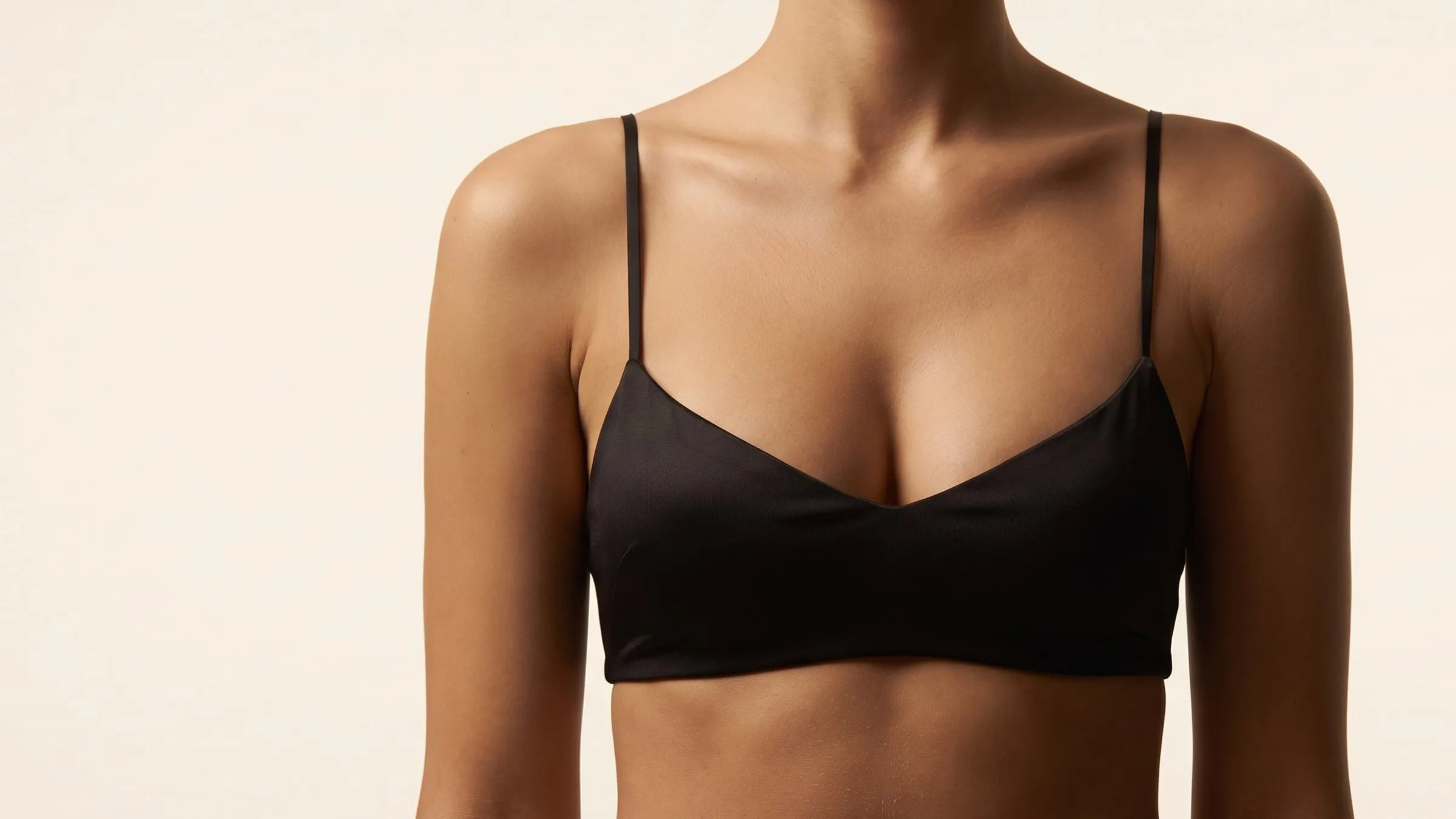
Sagging breasts, or breast ptosis, is when the breast tissue and nipple descend towards or below the crease under the breast as skin and internal support stretch with time, gravity, pregnancy and weight change. Exercise and bras cannot reverse it. A breast lift (mastopexy) repositions the nipple and reshapes the tissue; Dr. Paulo Michels in Abu Dhabi adds an internal support layer to help it last.
Treated with
What does “sagging” actually mean medically?
Breast ptosis — from the Greek word for “falling” — is the medical name for sagging. It describes a change in the relationship between three landmarks: the nipple, the lowest point of the breast tissue, and the inframammary fold, the natural crease where the breast meets the chest wall. In a youthful breast the nipple sits above the fold and the tissue is held high by firm skin and internal ligaments. With ptosis, the tissue and nipple descend towards, and eventually below, that fold.
Sagging is not a medical problem. It does not affect breast health, and many women live comfortably with it. It becomes a reason to see a plastic surgeon when it affects how clothes fit, how you feel about your body, or causes discomfort in the crease underneath, such as rashes in the heat of a UAE summer.
What causes breasts to sag?
The breast is made of glandular tissue and fat, held in an envelope of skin and suspended by fine fibrous ligaments. There is no muscle inside it. Anything that stretches the skin envelope or the ligaments, or changes the volume inside them, allows the breast to descend:
- Age and skin quality — collagen and elastic fibres decline over time, so the skin holds its shape less well.
- Pregnancy — the glands enlarge and then shrink back, stretching the envelope and leaving less volume to fill it (see deflated breasts after pregnancy).
- Weight change — gaining and losing weight, including rapid loss with medication or bariatric surgery, stretches and then empties the skin (see “Ozempic breasts”).
- Breast size and weight — larger, heavier breasts place more load on the skin and ligaments (see heavy breasts).
- Genetics — skin elasticity and breast shape run in families.
- Smoking and sun exposure — both damage the collagen in the skin of the chest.
Breastfeeding is often blamed, but the changes of pregnancy itself, weight change, age and genetics are generally considered more important than breastfeeding alone.
How is breast ptosis graded?
Surgeons use the Regnault classification, which is based on where the nipple sits relative to the breast fold. The grade matters because it largely decides which type of lift — and which scar — you need.
| Grade | Where the nipple sits | Typical correction |
|---|---|---|
| Pseudoptosis | At or above the fold, but the lower breast hangs below it | Lower-pole reshaping, sometimes an implant or a limited lift |
| Grade 1 (mild) | At the level of the fold | Periareolar lift, or an implant alone in selected cases |
| Grade 2 (moderate) | Below the fold, above the lowest point of the breast | Vertical (lollipop) or L-shape short-scar lift |
| Grade 3 (severe) | Well below the fold, at the lowest point, pointing down | Anchor (inverted-T) lift |
Grading is done at the consultation with you standing, with measurements from the collarbone and breastbone to the nipple and from the nipple to the fold. The two sides are graded separately, because many women have a different degree of sagging on each side (see breast asymmetry).
Can sagging breasts be lifted without surgery?
Honestly, no — not in a way that lasts. It is worth knowing what each option can and cannot do:
- A well-fitted supportive bra is the most effective non-surgical measure. It improves shape and comfort while worn, and it reduces strain during exercise.
- Chest exercises strengthen the muscle underneath the breast and improve posture, but cannot shorten stretched skin or raise the nipple.
- Creams, oils and massage can make the skin feel smoother; none has been shown to reverse ptosis.
- Energy-based tightening and threads may produce a modest, temporary tightening of the skin but cannot reposition the nipple or reshape the breast.
- Fillers are not recommended for breast volume or lift.
What you can do is protect the tissue you have: keep a stable weight, avoid smoking, protect the chest skin from sun, and wear good support during exercise.
Which operation corrects sagging breasts?
Breast lift (mastopexy)
A breast lift removes excess skin, reshapes the breast tissue into a higher, more conical form and moves the nipple and areola to a youthful position; stretched areolas are reduced at the same time (see large or stretched areolas). The incision follows the degree of sagging — periareolar, vertical (lollipop), L-shape short-scar or anchor. Where the lower breast has generous tissue, Dr. Paulo Michels can use an auto-augmentation, moving your own tissue higher to restore upper fullness without an implant. The lift itself is described in detail on the breast lift page, and the scar options in the guide to breast lift incision patterns.
Breast lift with implants
If the breast has also lost volume — common after pregnancy or weight loss — a lift alone may leave it high but flat at the top. Combining the lift with a cohesive silicone implant, placed in a Dual Plane pocket, restores upper-pole fullness in one operation. See mastopexy with implants, and the guide breast lift or implants? for how the choice is made.
Breast reduction
When sagging comes with heavy, large breasts, a reduction is performed — and every reduction includes a lift, repositioning the nipple higher and reducing the areola.
The Internal Bra
A lift held only by tightened skin tends to settle, because skin stretches. Dr. Michels adds an autologous Internal Bra — a sling of your own fascia and muscle beneath the reshaped breast, plus permanent sutures reinforcing the fold — to carry the load from within. It does not make a lift permanent, but it slows the rate of settling; see how long an internal bra lasts.
What does recovery look like?
- Days 1–3: tightness and moderate discomfort, eased by ultrasound-guided nerve blocks placed during surgery and simple oral medication.
- Days 5–7: most patients return to desk work.
- Weeks 1–6: light walking from the first day; no high-impact exercise or upper-body weights for 4 to 6 weeks; support bra day and night for 4 to 6 weeks.
- Months 3–6: swelling settles and the final shape emerges; scars continue to mature for 12 to 18 months.
The guide to breast lift recovery and scars covers each stage in more detail.
What are the risks and limits of a lift?
A lift is real surgery. Risks include bleeding, infection, fluid collection, delayed wound healing, changes in nipple sensation, visible or widened scars, some asymmetry between the sides, and, rarely, problems with the blood supply to the nipple, which is more of a concern in smokers. Breastfeeding after a lift is often possible but cannot be guaranteed.
A lift also has limits. It cannot stop ageing, and a later pregnancy or significant weight change will affect the result. It trades sagging for scars. And it does not add volume on its own — if you want more fullness, that is a separate decision.
When should I see a surgeon?
See a plastic surgeon if sagging bothers you and you are at a stable weight, you have finished — or are reasonably sure you have finished — having children, and you have stopped breastfeeding for several months. See a doctor promptly, whatever your plans, if you notice a new lump, skin dimpling, nipple changes or discharge; these are not signs of ptosis and need assessment in their own right.
How is breast ptosis assessed at the consultation?
Most patients start with a WhatsApp message, sharing their concerns and, if they wish, photos. At the consultation at Elyzee Hospital in Abu Dhabi, Dr. Paulo Michels examines both breasts standing, grades the ptosis on each side, measures the chest and assesses skin quality and thickness. He explains which lift pattern your anatomy requires, whether volume should be added, and whether the Internal Bra is likely to help. Where implants are being considered, a Crisalix 3D simulation previews possible shapes on your own body as a planning aid. Consultations are held in English, Portuguese or Spanish, patients from Dubai and across the UAE are seen routinely, and visits are grouped to reduce travel. Costs are individual and quoted after the consultation.
Questions, answered
Sagging Breasts (Breast Ptosis) — your questions
What is breast ptosis?+
Breast ptosis is the medical term for sagging breasts. It describes the downward descent of the breast tissue and the nipple-areola complex relative to the inframammary fold, the natural crease under the breast. It is graded by where the nipple sits compared with that fold. Ptosis is not a disease and carries no health risk; it is a change in shape that some women choose to correct surgically.
What causes breasts to sag?+
The main causes are loss of skin elasticity with age, stretching of the internal support ligaments, pregnancy, significant weight gain or loss, larger and heavier breasts, genetics, smoking and sun damage to the chest skin. Usually several factors act together. Implants that are too heavy for the tissue can also accelerate sagging over time.
Does breastfeeding make breasts sag?+
Breastfeeding is commonly blamed, but the changes of pregnancy itself — rapid enlargement followed by shrinkage of the milk glands — together with weight change, age and genetics are generally considered more important than breastfeeding alone. Whether or not you breastfeed, most women notice some loss of volume and firmness after pregnancy.
How is breast sagging graded?+
Surgeons use the Regnault classification. Grade 1 (mild): the nipple is at the level of the breast crease. Grade 2 (moderate): the nipple is below the crease but still above the lowest point of the breast. Grade 3 (severe): the nipple is well below the crease, at the lowest point, often pointing downwards. Pseudoptosis is when the nipple stays at or above the crease but the lower breast hangs below it.
Can exercise lift sagging breasts?+
No. The breast contains no muscle; it sits on top of the chest muscle. Strengthening the chest can improve posture and the look of the upper chest, but it cannot shorten stretched skin or ligaments or raise the nipple. Exercise is excellent for general health and weight stability, which helps protect a result after surgery.
Can creams, massage or tape lift the breasts?+
No cream, oil, massage technique or tape has been shown to reverse ptosis. Moisturisers can improve how the skin feels and looks on the surface, and tape or a good bra changes the shape while worn, but once removed the breast returns to its natural position. They are harmless, but they are not a treatment.
Are there non-surgical breast lift treatments?+
Energy-based skin tightening, threads and similar treatments are marketed for the breast, but they cannot reposition the nipple or reshape the breast mound, and any tightening effect is modest and temporary. For true ptosis, especially grade 2 or 3, a surgical lift is the only reliable correction. A well-fitted supportive bra remains the best non-surgical option for comfort and shape.
Will breast implants fix sagging?+
Only in mild cases or pseudoptosis. An implant adds volume and can fill out loose skin, but it does not raise the nipple. If the nipple sits below the crease, an implant alone can leave the breast tissue sliding off the front of the implant, the so-called waterfall deformity. Moderate or severe sagging needs a lift, with or without an implant.
Which operation corrects sagging breasts?+
A breast lift (mastopexy). It removes excess skin, reshapes the breast tissue and moves the nipple and areola higher. If you also want more fullness, it can be combined with an implant (mastopexy with implants) or fat transfer; if your breasts are also heavy, a reduction includes a lift. Dr. Paulo Michels adds an Internal Bra, built from your own tissue, to support the reshaped breast.
What scar will a breast lift leave?+
The incision is chosen by the degree of sagging: around the areola for mild cases, around the areola plus a vertical line (lollipop) or a short L for moderate sagging, and an anchor pattern with a scar in the crease for severe sagging or very large breasts. Scars are permanent but usually fade and flatten over 12 to 18 months.
How long does a breast lift last?+
No lift is permanent. Skin keeps ageing, and pregnancy or significant weight change will affect the result. A lift resets the shape; supporting it with an autologous Internal Bra slows how quickly it settles. With a stable weight and no further pregnancies, results are expected to stay good for many years.
Should I wait until I have finished having children?+
Ideally, yes. A future pregnancy stretches the breast again and can undo part of a lift. Many women plan the lift once they have completed their family and finished breastfeeding, and allow the breasts to settle for several months afterwards. If you are unsure about future pregnancies, this is discussed at the consultation.
What is recovery like after a breast lift?+
Most patients return to desk work in about 5 to 7 days. Light walking starts immediately; high-impact exercise and upper-body weights wait 4 to 6 weeks. A support bra is worn day and night for 4 to 6 weeks. Swelling settles gradually, and the final shape is usually seen at 3 to 6 months.
Can I breastfeed after a breast lift?+
Many women can, because modern lift techniques keep the nipple attached to the underlying breast tissue. However, any breast surgery can reduce the ability to breastfeed, and this cannot be guaranteed. If future breastfeeding matters to you, say so at the consultation so the technique can be planned with that in mind.
Take the first step
Ask Dr. Paulo Michels about your case
Other breast concerns
Keep reading